
THE WEEKENDER #3
You might not know it, but 13 June is one of the most important dates in football history, and Newcastle United were at the heart of it.

Personally, I didn’t watch a second of it, but those who did, assure me that the Champions League final was boring as shit. I’m inclined to believe them. After all, I’ve had the misfortune to watch Arsenal play twice this season.
Of course, that’s part of a much wider complaint this year that football, in the Premier League at least, has become unbearably dull. Low blocks and sideways passing are punctuated by what have become the high points of excitement - unfathomably tedious set-pieces, where every player stands in the six-yard box, blocking and wrestling the others, until the referee may or may not blow the whistle and VAR may or may not spend three hours deciding whether penalties or goals should be awarded. Certainly, none of us will get back the two hours we devoted to the 0-0 at Molineux this season.
Given the tens of millions of pounds hanging on results and the accompanying hysterical media scrutiny, it’s perhaps not surprising that winning is prized over playing attractive football these days. The unpredictable maverick player is all but extinct. In fact, you’d be hard pressed to find any kind of creative no. 10 these days. It’s all pre-learnt structure and ingrained, repeated training ground actions. Yawwwwnn. And yes that means you too, Eddie.
As the Arsenal manager put it in 25-26:
“the standard of play would go up if the result were not all-important. Fear of defeat and loss of points eat into the confidence of players”.
Except, of course, that wasn’t 2025-26, but 1925-26. And the Arsenal manager wasn’t Mikel Arteta, but Herbert Chapman. More legendary than lego-ndary, you might say. The serious point being that this discussion about pragmatism and idealism in football, about the “right way” to play, has been going on for more than a hundred years.
Most interestingly from our perspective, the great villains of the 1920s that so exercised Chapman and his contemporaries played in black and white stripes (of the equal sized variety, not the utterly vile car tyre-tread variety). And the Newcastle United team of that era choked the entertainment out of football so successfully that they not only attracted the universal opprobrium of the media and opposing fans, but also prompted the rule change that has shaped the modern game of football as you have watched and understood it ever since.
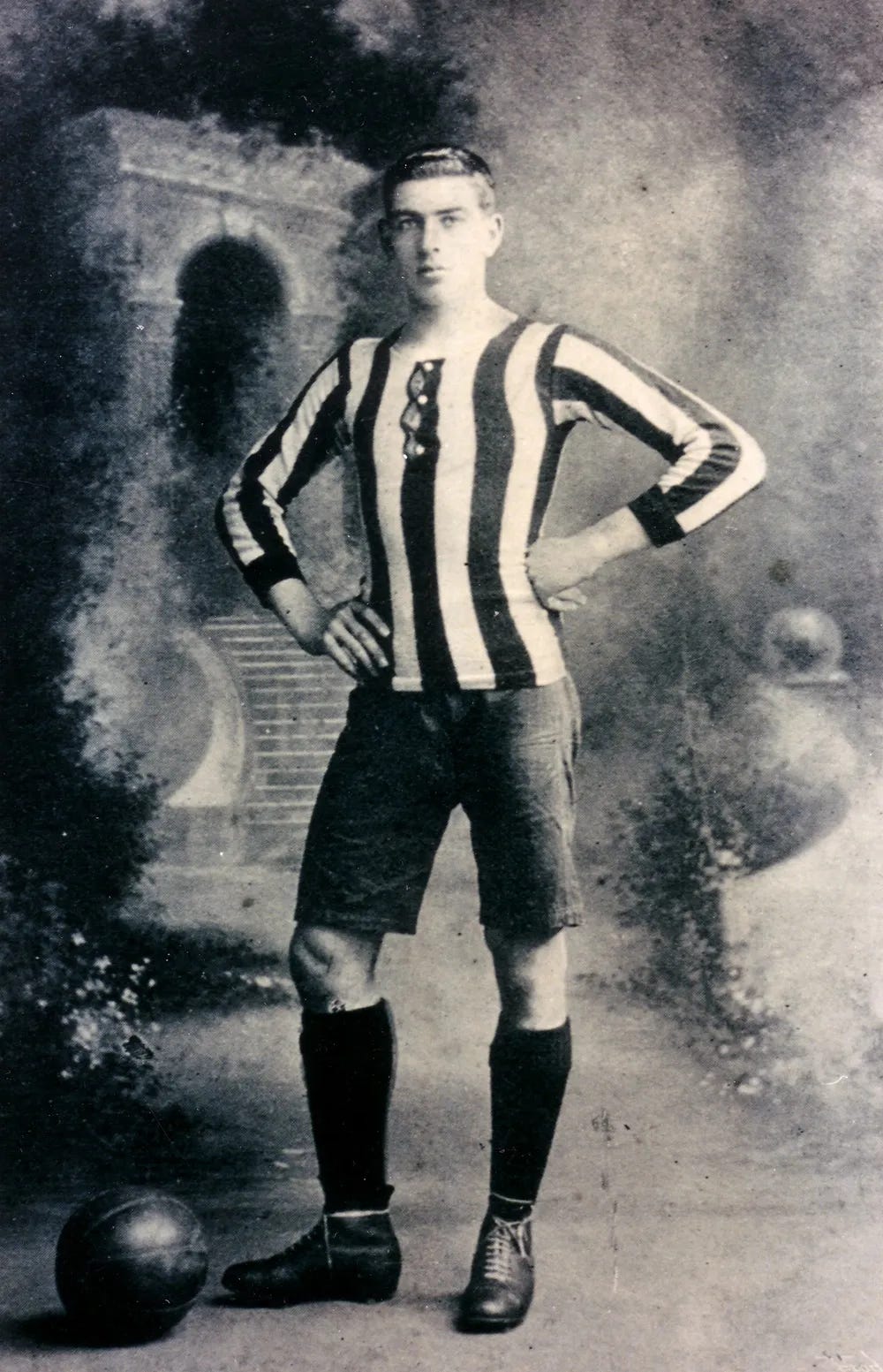
Led by their twin defensive titans, Bill McCracken and Frank Hudspeth - 19 years and over 450 matches each in black and white - United became the unsurpassed masters of the offside trap at a time when the law still insisted on two defenders and the goalkeeper between the last attacker and the goal. As Hudspeth and McCracken realised, this made the offside trap foolproof - Steven Taylor hadn’t yet been invented - since the penultimate defender could step up, safe in the knowledge that he had both his keeper and a covering defender behind him.
At its height in 1924-25, the defensive tactic had already yielded six 0-0s for United by the middle of February, and this in an era when games were defined by 2-3-5 formations and wildly high-scoring matches. That season the average number of goals would fall to a previously unheard of 2.58 per game. Attendances and entertainment fell along with them, unless you were a Geordie, that is.
Spurred into action - rule changes to hamper us are no new thing either - the FA considered two options for a new offside law, ultimately plumping for the version which was hastily voted through at the International Board exactly 101 years ago today on 13 June 1925 and which has stood pretty much ever since. Instead of three defenders goalside, there would now only be two. Without a covering defender, the offside trap would be too dangerous to try and, with that, United’s ploy had been legislated out of the game: “Offside has always been an occasion to the League crowd of the most violent controversy, but on a tree so rich one branch will not be missed,” opined The Guardian.
On that they were wrong. The branch would very much grow again, as would the violent controversy. However, viewed from this longer historical perspective, Arsenal’s soporific but effective style this season is part of a long-term pattern in the English game. Rather than a one-off aberration it is just the latest manifestation of an English pragmatism that has long been opposed to the more idealistic (usually continental) form of the game. Forever slain, the insular Roundhead monster only rises again to be constantly reborn in new guises to do battle once more.
In fact, as Jonathan Wilson explains in his masterful history of the tactical side of the game, Inverting the Pyramid, this pattern goes back to the very origins of the first formalised version of the game in the Victorian era, and the dichotomy between the physical running game of the English public schools and the passing game that had been developed in Scotland. The latter, needless to say, encountered considerable resistance among the English traditionalists until its effectiveness became undeniable.
Interesting is that the idealist variants of the game grew in isolation, away from competition for results. The founders and evangelists of the Scottish passing game, for example, were Queen’s Park. Founded in the 1860s under a different variant of the offside rule and unable to find opponents for competitive matches, they played many more internal practice games in their early days than proper fixtures. This intensified their own “pattern-weaving” passing style without having to worry about the pressure to win matches.
A similar isolation drove the idealism of another great, technically superior style, the exuberant Argentinian approach known as la nuestra or “our style”. Attracting distrust and dispute among touring English sides, their style was, as one contemporary newspaper put it, “less monochrome, less disciplined and methodical”, because it did not sacrifice “individualism to the collective”. Then, when Argentina withdrew from the international stage for two decades until the 1950s, those impulses were hothoused in their hugely popular domestic league, to the point where entertainment and attacking style became as important as winning.
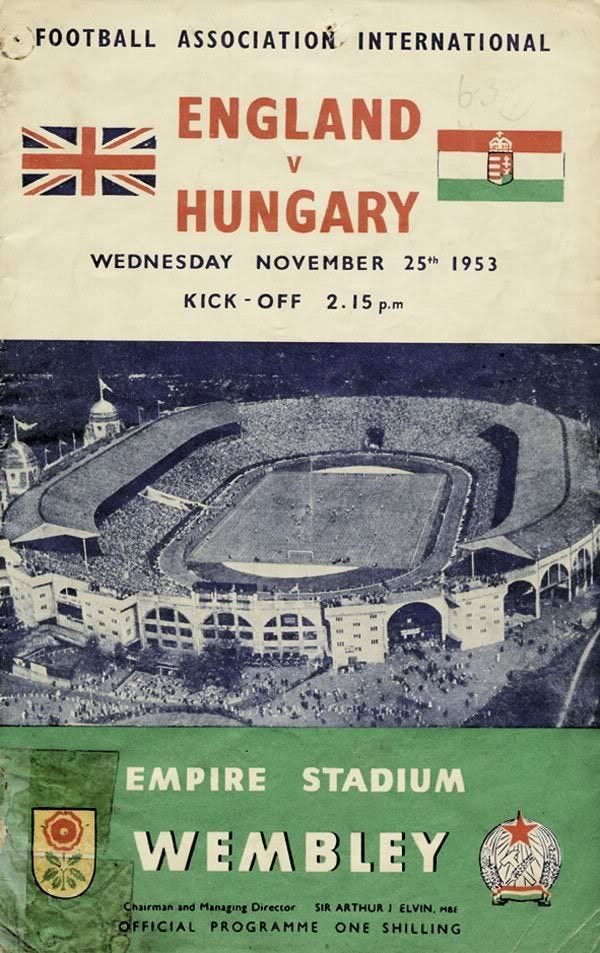
But it’s the story of the other great continental football style that is most telling about the reactionary pragmatism of English football, the Danubian School that humiliated England 6-3 at Wembley in 1953 in the form of Ferenc Puskás and his Magical Magyars who lost only one game out 69 in the first half of 1950s. And that story is damning for both its preamble and its epilogue.
Ironically, the style had first been fostered by a visionary Englishman from Burnley, Jimmy Hogan, a radical disciple of the Scottish passing game whose ideas had been too progressive for domestic tastes. Alienated by the scepticism of his English peers and his scornful treatment by the FA after World War I, Hogan found a more welcoming environment from the Austrian FA in the 1920s, laying the foundations for the idealistic passing game that eventually took flight in Hungary.
And how did England respond to their footballing schooling in 1953? By humbly acknowledging what they could learn, perhaps by integrating greater technical finesse into their traditional physical prowess? Of course not. The England right back that day, Alf Ramsey, was sceptical and attributed the result to good fortune and long balls. Meanwhile, the most garlanded club manager of the times, Stan Cullis of the all-conquering Wolves side, was equally unconvinced and turned instead to the deeply flawed statistical analysis of Wing Commander Charles Reep of the RAF and his spuriously argued claim that passing in fact reduced the chances of scoring a goal.
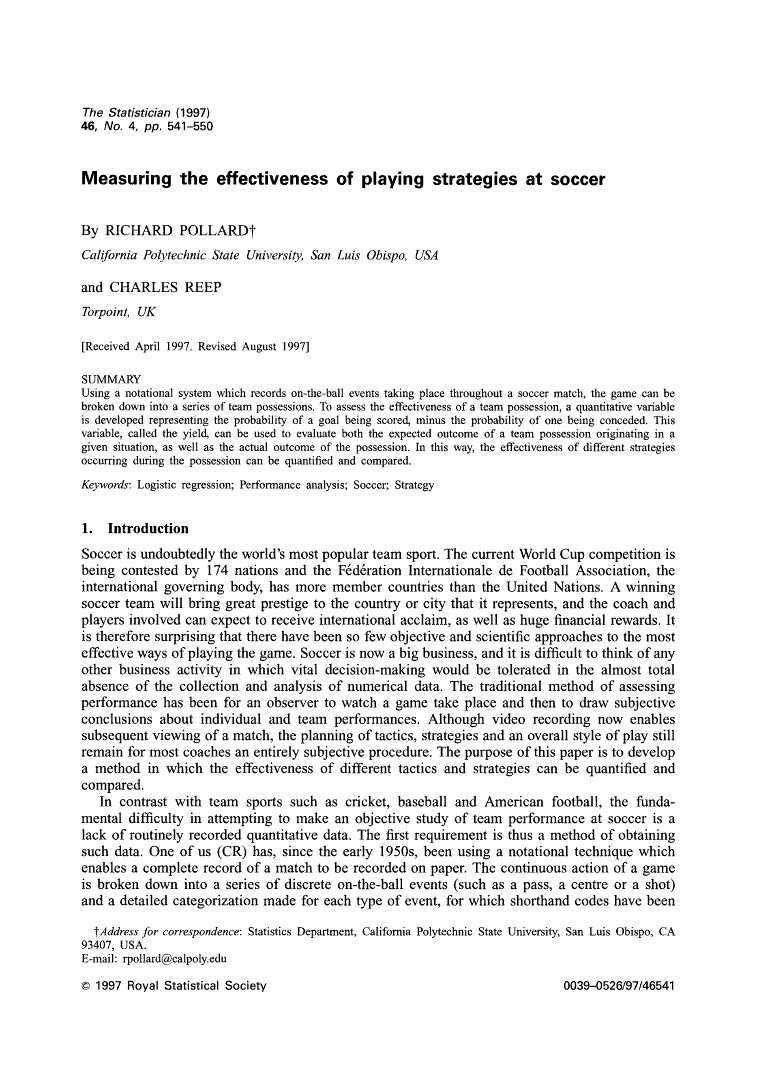
By his own later account, Reep had become frustrated by the lack of directness in the way teams played and so began one day to meticulously record the number of attacks made in a match at Swindon’s County Ground in March 1950. A PE graduate from Loughborough, he advised Cullis on tactics before publishing his analysis in the The Statistician - The Journal of the Royal Statistical Society. Almost all goals, he claimed, were scored from fewer than three passes, and that therefore was the way to maximize results. The fact that his sample involved teams that very rarely played more than three passes didn’t seem to trouble him. Long ball and POMO - the position of maximum opportunity - were born.
Rather than run into the sand, Reep’s theory became the closest thing to an English tactical school (God forbid!), most famously influencing the approach of Charles Hughes, the FA Director of Coaching in the 1980s. Hughes too preached the long ball game, publishing a number of works that culminated in The Winning Formula. Given the conspicuous lack of success of the national side, it was a curious title. The St James’ faithful who suffered Jack Charlton’s application of the theory with Billy Whitehurst and George Reilly felt the same way, famously booing him out of the exit in the preseason of 1985.
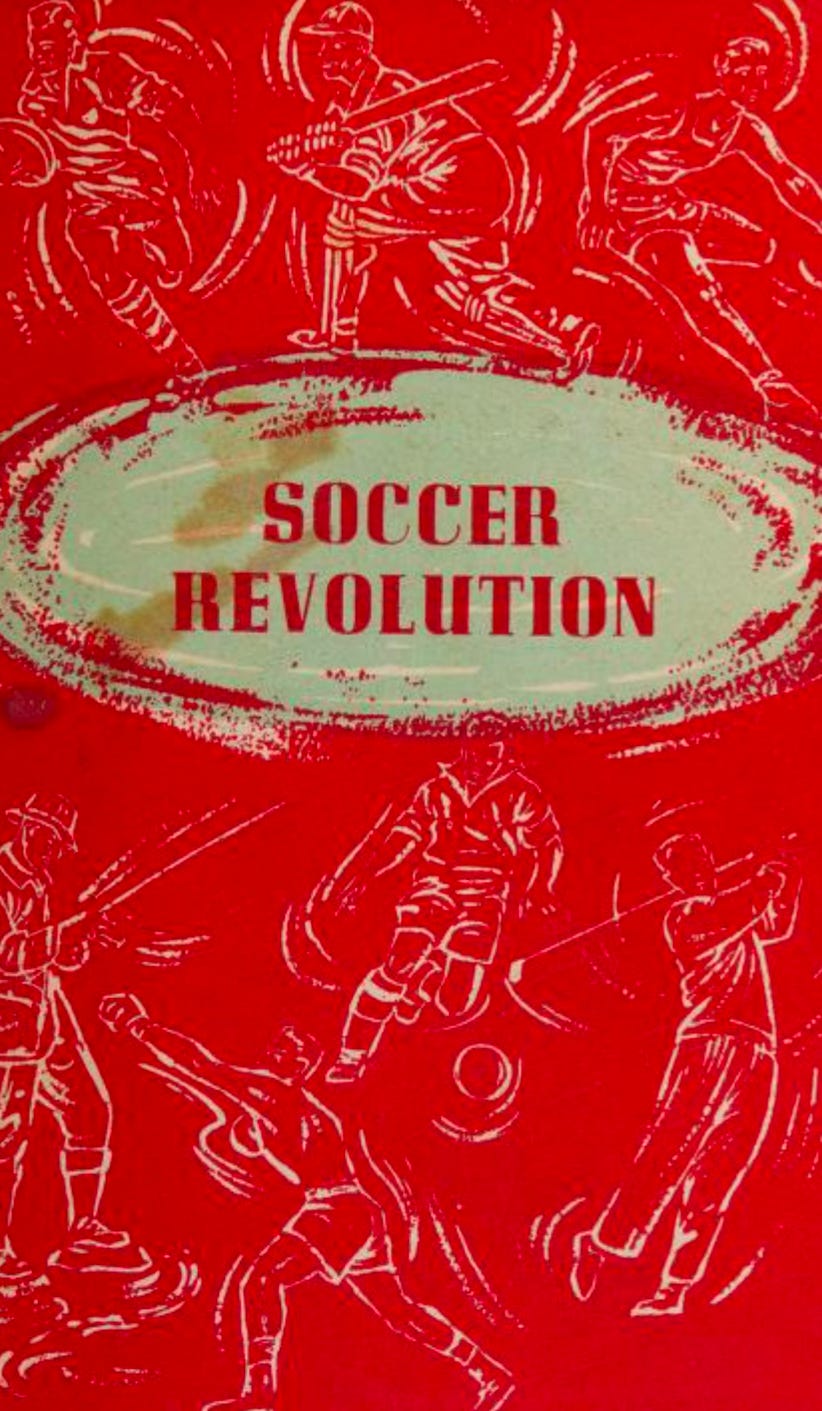
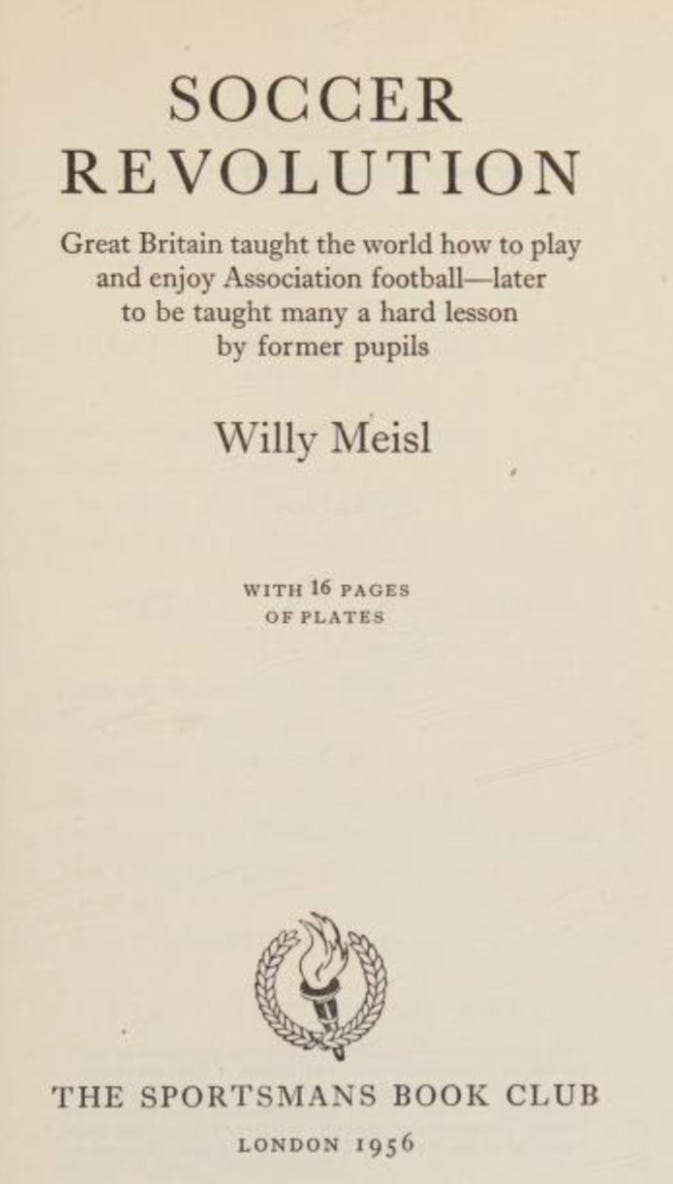
Meanwhile, back in the mid-1920s, it was Chapman who perfected a new pragmatic response to the changed offside law. He dropped a third defender back to create the WM formation that dominated football for the next few decades. It was this formation that first appealed to Reep who heard Chapman lecture in the 1930s. And it was this step that the great Austrian-born footballing romantic and Anglophile Willy Meisl - younger brother of Hugo Weisl who had championed Hogan at the Austrian FA in the 1920s - blamed in his polemic Soccer Revolution for the decline of English football that culminated at Wembley in 1953.
But before Chapman perfected the new orthodoxy, there was a brief interlude after the new offside law when goals reigned supreme again in England, and the greatest beneficiaries were Newcastle United and their superstar signing Hughie Gallagher. Indeed, Chapman’s Arsenal were routed 7-0 at St James in October 1925 as chaos took hold. The following season, two years after the introduction of the new law, Gallagher’s goals would carry United to their last League title in 1927.
As the centenary of that season approaches, it’s worth remembering that everything in football is cyclical.
Maybe even that…
Matthew Philpotts
Scots Wahey!

This is the kind of enduring vendetta I can certainly get behind. Fair play.

Clydebank to Cafu
An excellent documentary that’s worth your time and sonething of an antidote to Infantino, FIFA Peace Prizes and Trump’s hostile American environment. On iPlayer - give it a watch.

Beautiful Winners
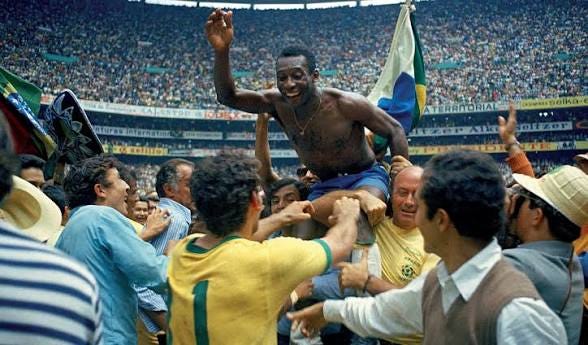
A nice read about the ultimate World Cup winning team of 1970.

Black England

David James
Paul Parker
Ashley Cole
Paul Ince
Sol Campbell
Des Walker
Raheem Sterling
Jude Bellingham
Ian Wright
Marcus Rashford
John Barnes
Michael Martin @TFMick1892.bsky.social
“Playing football is very simple, but playing simple football is the hardest thing there is.” - Johan Cruyff.
‘’Herbert Chapman. More legendary than lego-ndary’’ - Matthew Philpotts
Thanks Matthew. A lovely bit of history but I think in the future people will still wonder how a physical team like Arsenal got through the season without conceding a penalty or receiving a red card.
😉