
Reasons for Optimism? Thinking Slow
Inspired by his Sunday evening reading, Matthew suggests events at the City Ground give us grounds for hope
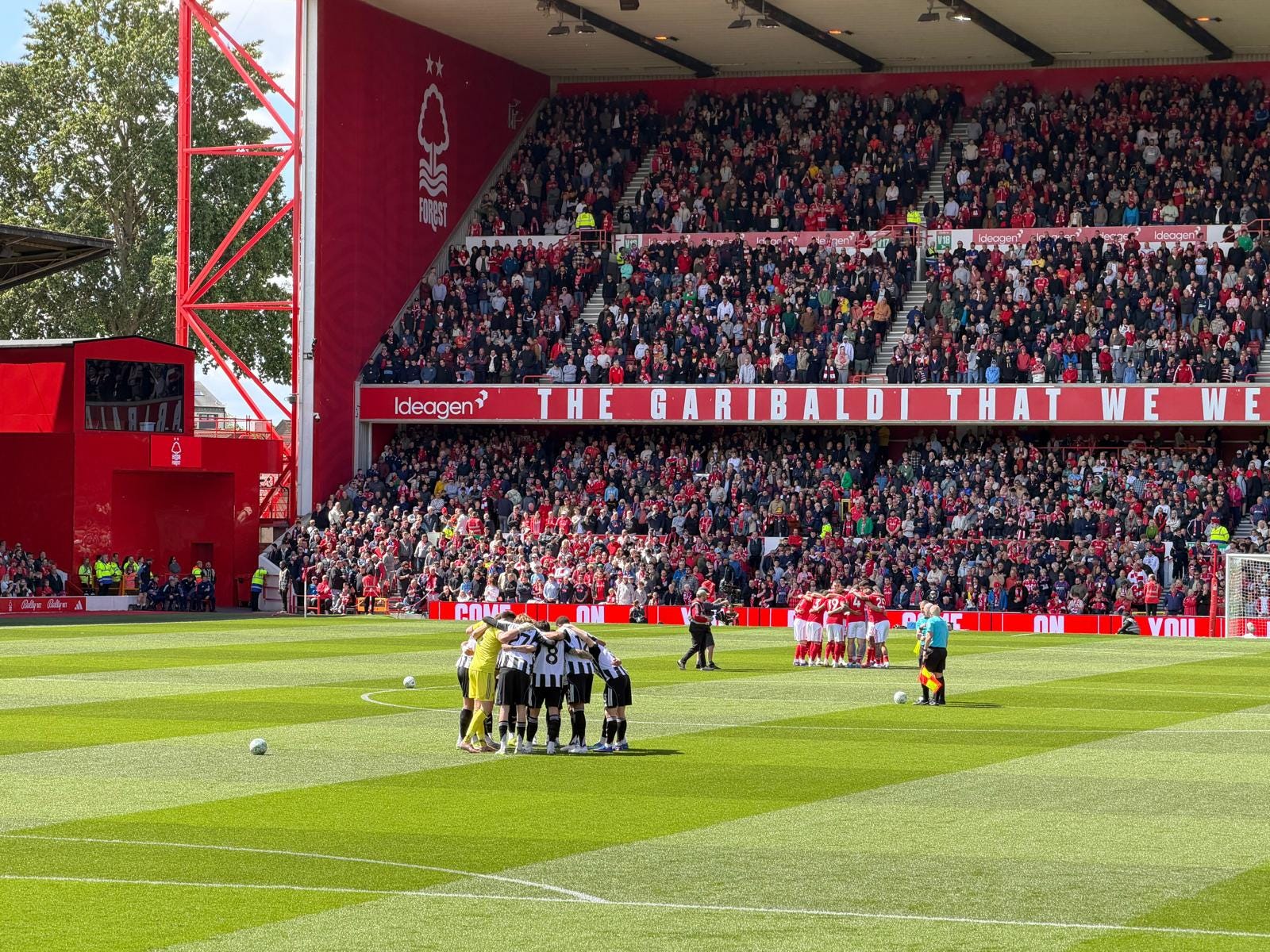
So many questions, so few answers. In fact with every passing game, the former pile up ever higher, while the latter only become ever more elusive. And so it was at the City Ground. A change in selection and system brought with it no greater clarity, only continuing stodge and deeper obfuscation.
Why do we keep on giving away leads? Why are we so utterly hopeless at retaining possession? Or keeping clean sheets, for that matter? Where has the famous intensity gone? Why is our best striker a substitute winger? How do you solve a problem like Woltemade?
And that's before we get onto the meatier questions. Just how good/ bad/ bang average are we? Will we bounce back next season? And, of course, is the current manager the person best equipped to achieve that?
As it happens, the last of these questions ran through my mind on Sunday night as I made my way through the opening pages of one of those books that have been peering at me from the coffee table for a number of months without ever persuading me to pick them up. Daniel Kahneman’s Thinking, Fast and Slow, since you didn't ask.
To the best of my knowledge, the Nobel Prize winning economist knows bugger all about football, but the social science schemer does know a thing or two about human beings’ spectacular capacity for coming to completely the wrong conclusion when faced with difficult questions. And for doing so with unshakable certainty and confidence.
You see, what we tend to do, according to his book, is not to answer the difficult question at all, even though we think we're doing precisely that. Instead, we use our intuition - we think fast instead of slow - and substitute the hard question for a much easier one, but without noticing.
Let me give you an example. How well did we play at Forest? How about against Brighton? Those are actually very hard questions to answer. You’d have to watch and re-watch every minute of the match, look at the whole structure of the team and its interactions, look at the defence, midfield, and attack in isolation and also as part of a whole. Look not only at every touch and pass but also at every movement and option off the ball. Consider not only what did happen but also what didn't happen and what might have happened. Look not only at our performance but also that of the opposition and the referee and the role of luck. And so on and so on…
So what do we do instead?
Our intuition says, fuck that, I'll just use the nearest available substitute that feels right. That'll do. The so-called “availability bias”, the answer that most readily comes to mind. And so we use the result as a shortcut. Sunday? 1-1. Yeah, we weren't terrible, we weren't great. All a bit meh. Brighton? 3-1. We were better, not perfect but better. Arsenal 0-1. We could have been worse.
That's not slow thinking. That's not insightful or analytical. We can all see the result, and we’ve all watched enough football to know that results don't necessarily match performances. If that's all there was to it, we wouldn't have to discuss it any more. And yet, we take that shortcut all the time. How do we predict the challenge of our next game every weekend? We look at the recent results of the team we’re playing. Or even worse, we succumb to the availability bias of their reputation.
Of course, we've never been surrounded by as much fast thinking as we are now. It is, by definition, the currency of social media. No wonder there's so much nonsense, not least about the merits, or otherwise, of Eddie Howe. If you want to understand the endless pointless cycle of those snap opinions, it's worth reading Kahneman again on the limitations of the human mind, namely:
“Our excessive confidence in what we believe we know and our apparent inability to acknowledge the full extent of our ignorance. Overconfidence is fed by the illusory certainty of hindsight.”
In other words, people refuse to admit all the many things they can't know when it comes to commenting on the manager's role. And that void is filled by a self-fulfilling narrative constructed after the event. They only ever choose to see confirmation of what they already believed.
Not that any of us is immune. As Big Nick moved at his customary sub-snail’s pace, showed his equally customary weak as piss robustness under pressure, and got customarily dispossessed, I reflected on how I was yet again cutting him slack that I wouldn’t afford Elanga or Murphy. I’m not answering the difficult question, “what's he contributing?” but instead the easier one, “do I like him?” And as I watched us labour again, I heard myself immediately grumbling about the manager playing square pegs in round holes, most of all when Hall entirely failed to defend with his right foot for the equaliser.
But a bit of slower thought suggests we can't have it both ways. I can't moan every week about the repeated 433, the excessive trust in a small number of privileged and ageing players, and the stupefying overcaution without giving Eddie credit for trying to change things in what looked like a 4231.
Indeed, what seems clear now is that the Arsenal and Brighton selections were temporary retreats to the safety of his trusted players in an attempt to steady the ship and guarantee our Premier League safety. With that achieved, there was a shift of emphasis at Forest to change and to the future.
That left me more hopeful than I have been for a long time that the necessary change might be forthcoming especially when Gordon was hung out to dry in the post-match presser. No Gordon or Tripps because they're not part of the future. Good. Woltemade tried as a second, deeper lying striker to see if it might work. Good. Oh and one game isn't enough to provide an answer to that question, no matter what your intuition might tell you quickly.
That's the thing about slow thinking, you see. It doesn't give immediate answers. We should all try it some time.
Matthew Philpotts
Tremendous read. The useful safety catch of our own thoughts being the acknowledgment we could be wrong and may not have all of the available facts and there are different ways to interpret what we’ve just seen. Excellent stuff.
Excellent and thought provoking article Matt. Not sure this slow thinking will catch on in the current madness of social media mind.